What each option really costs
The weekly hire rate is only part of a hire bill. A typical 12-month hire of a single toilet or welfare cabin involves:
- The rate itself: advertised UK rates typically run £50–£120 per week depending on spec and region.
- Delivery and collection: charged each way, commonly £75–£150 per movement.
- Damage waiver or insurance: usually 10 to 15% on top of the hire rate.
- The rate never stops: hire runs through holidays, weather delays and programme overruns. If the job slips two months, the bill grows two months.
Buying is one number. Our single WC cabin is £3,200, a WC + urinal cabin £4,600, a WC + shower cabin £4,000, ex VAT, ex-works with delivery quoted by postcode. Full price list on the welfare cabins page and in our welfare unit cost guide. Add your base and connection (a plumber and electrician for a few hours), and, at the end of the job, either move it to the next site or sell it.
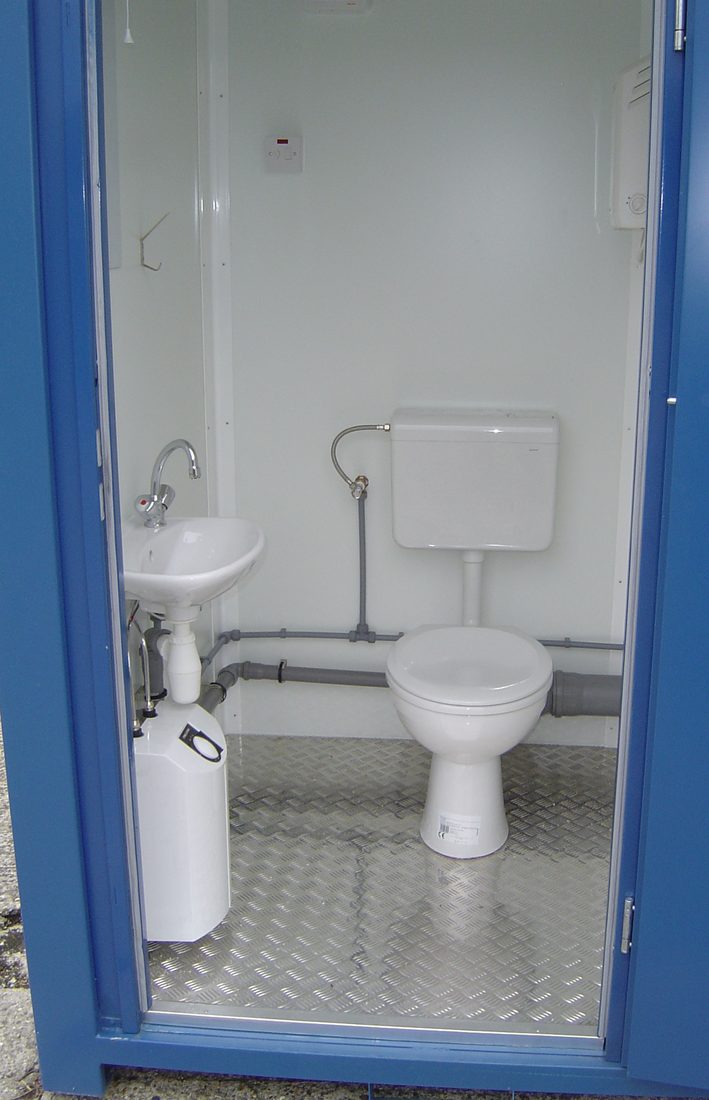
A worked 12-month example
Take the workhorse: an 8ft cabin with WC and urinal, serving a crew of a dozen. Hire rate assumed at £85 per week, mid-range for this spec.
| Cost line | Hire (12 months) | Buy new |
|---|---|---|
| Hire, 52 weeks × £85 | £4,420 | - |
| Damage waiver at 12% | £530 | - |
| Delivery + collection | £240 | included |
| Purchase price | - | £5,600 |
| Cash out over 12 months | £5,190 | £5,600 |
| Asset you own at month 12 | £0 | a one-year-old cabin |
On raw cash the two are nearly level at month 12. The difference is the last row. The hire spend is gone; the purchased cabin is still worth a substantial share of what you paid, because steel cabins are durable and there is an active second-hand market. Sell it, and your net cost for the year is far below the hire bill. Keep it, and year two costs you nothing but maintenance.
That is the strong opinion of this guide, and here is the number behind it: paying hire on the same cabin for a second year is throwing money away. Year two at £85 a week is another £4,420 for a cabin you could by then have owned outright.
The crossover point
- Pure cash: buying overtakes hiring at roughly 10 to 16 months, depending on where your hire rate sits in the £50–£120 range.
- Counting the asset: if you credit the cabin's resale value, the economic crossover lands around the six-month mark for typical rates.
- Repeat users: if you hire welfare units every season (sports clubs, events businesses, groundworks firms) you cross over on the first long job and save on every one after it.
When hiring genuinely wins
We sell cabins, so take this as against-interest honesty: hiring is the right call more often than a seller would like. Hire when:
- The need is short: a two-week event, a six-week job. The arithmetic never catches up.
- You need serviced units. Hire firms empty, clean and restock; a purchased cabin's upkeep is on you (or your cleaner).
- You have nowhere to put it afterwards and no appetite to sell it on.
- Cash flow matters more than total cost. Hire spreads the spend, though remember it never stops.
When buying wins
- Long deployments: anything from around six months, per the arithmetic above.
- Recurring need: clubs and contractors who hire every year are buying the hire company's cabin for them, slowly.
- Compliance you keep: construction sites need welfare from day one under CDM 2015 (HSE L153); owning the unit means every new site starts compliant with kit you already trust.
- Control: your spec, your colours, no call-off dates, no de-hire damage arguments, and the unit is where you left it.
If that is your situation, the in-stock range with live prices is on the welfare cabins page, delivery is explained on the delivery page, and larger combined buildings are made to order.